
Cuban chains are one of the most popular chain styles in the global jewelry market. From fashion accessories to premium statement pieces, Cuban chains appear in a wide variety of designs and price levels.
Although many buyers simply refer to “Cuban chains” as one style, manufacturers actually produce many variations based on link structure, surface finishing, and chain density.
Based on production data and supply chain observations from stainless steel jewelry manufacturers, several Cuban chain variations consistently stand out as the most common and commercially successful styles in the market.
In this guide, we introduce some of the most popular Cuban chain styles, along with their typical features, price positioning, and common applications.
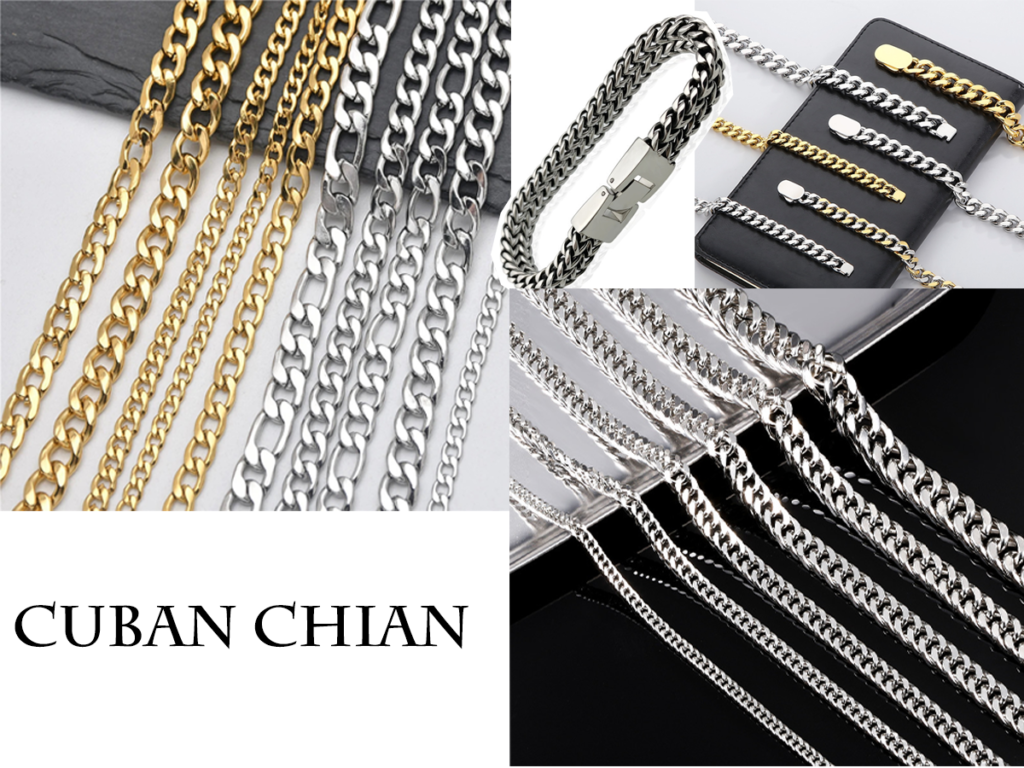
Market Overview of Popular Cuban Chain Styles
The following table provides a simplified overview of several widely used Cuban chain styles and their typical market positioning.
| Rank | Chain Style | Market Popularity | Typical Price Level |
|---|---|---|---|
| 1 | NK Chain / Figaro Variation | Very High | $ |
| 2 | Classic Cuban Chain | High | $$ |
| 3 | Dense Flat NK Chain | High | $$ |
| 4 | Combination Cuban Chain | Medium | $$$ |
| 5 | Double-Weave Cuban Chain | Medium | $$$ |
1.NK Chain (Standard Cuban Chain Structure)
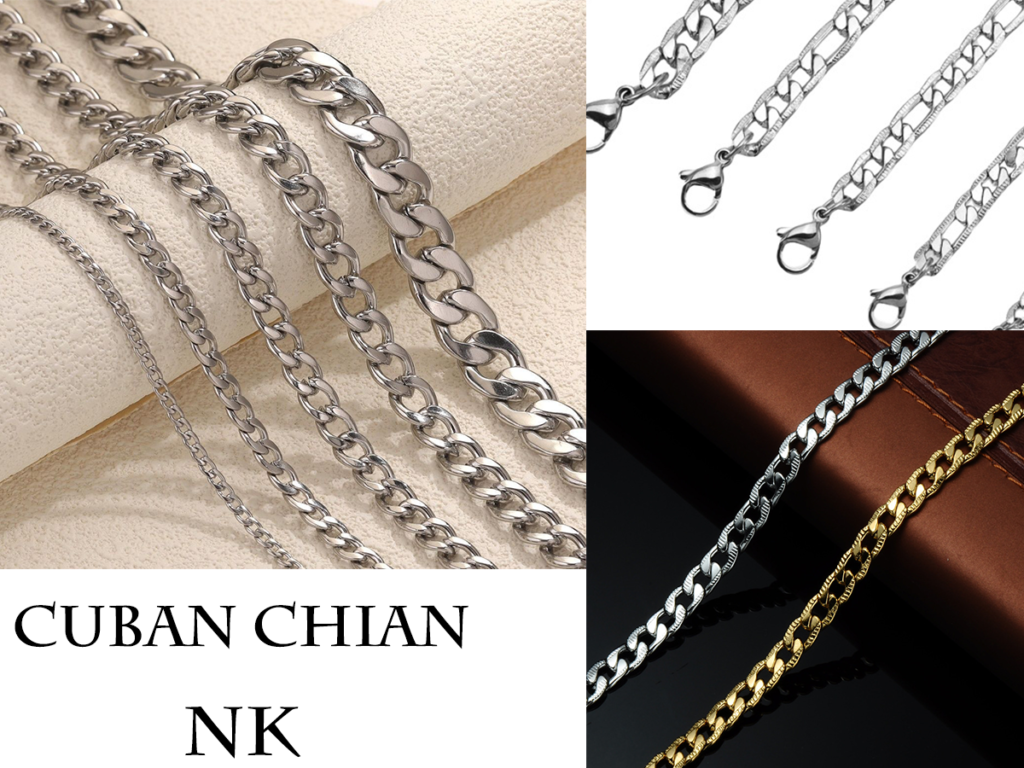
The NK chain is one of the most widely produced and best-selling structures in the Cuban chain category.
Because of its relatively simple production process and stable supply chain, NK chains usually have the lowest manufacturing cost, making them highly competitive in price. This makes them extremely attractive for jewelry brands and retailers that focus on high-volume, fast-moving products.
A common variation of the NK chain uses three short links followed by one longer link, a structure widely known as the Figaro chain.
Both the standard NK chain and its Figaro-style variation are consistently strong sellers in the fashion jewelry market. Their clean appearance, versatility, and comfortable wearability make them popular among fashion-conscious consumers.
For many jewelry businesses, NK chains represent an important profit-driving product category, offering a good balance between cost efficiency and strong market demand.
2.Classic Cuban Chain
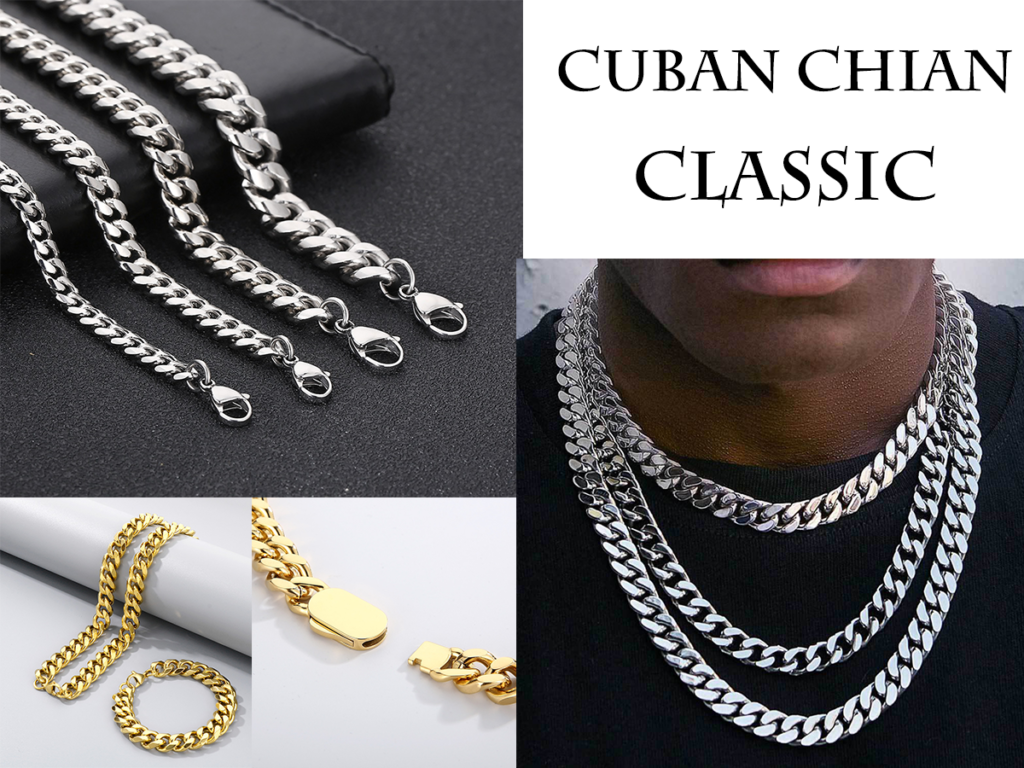
The classic Cuban chain is often considered the most iconic version of the Cuban chain design.
Compared with NK chains, classic Cuban chains typically feature thicker and more solid links, giving the chain a stronger visual presence and a heavier feel. Because of this, their production cost and market price are usually higher than standard NK chains, especially in larger sizes.
One of the defining characteristics of classic Cuban chains is the variety of surface cutting and polishing styles used during production. The most common finishes include:
- Round-edge polishing
- Six-facet cutting
Other variations such as four-facet cutting and two-facet cutting are also used, though less frequently.
In terms of size preferences, different markets often favor different widths:
Men’s styles
- 6mm
- 8mm
- 10mm
Women’s styles
- 3mm
- 4mm
- 5mm
Because of their heavier structure and bold appearance, classic Cuban chains are often used in premium jewelry designs, especially when paired with high-polish finishing and gold electroplating.
3.Dense Flat NK Chain
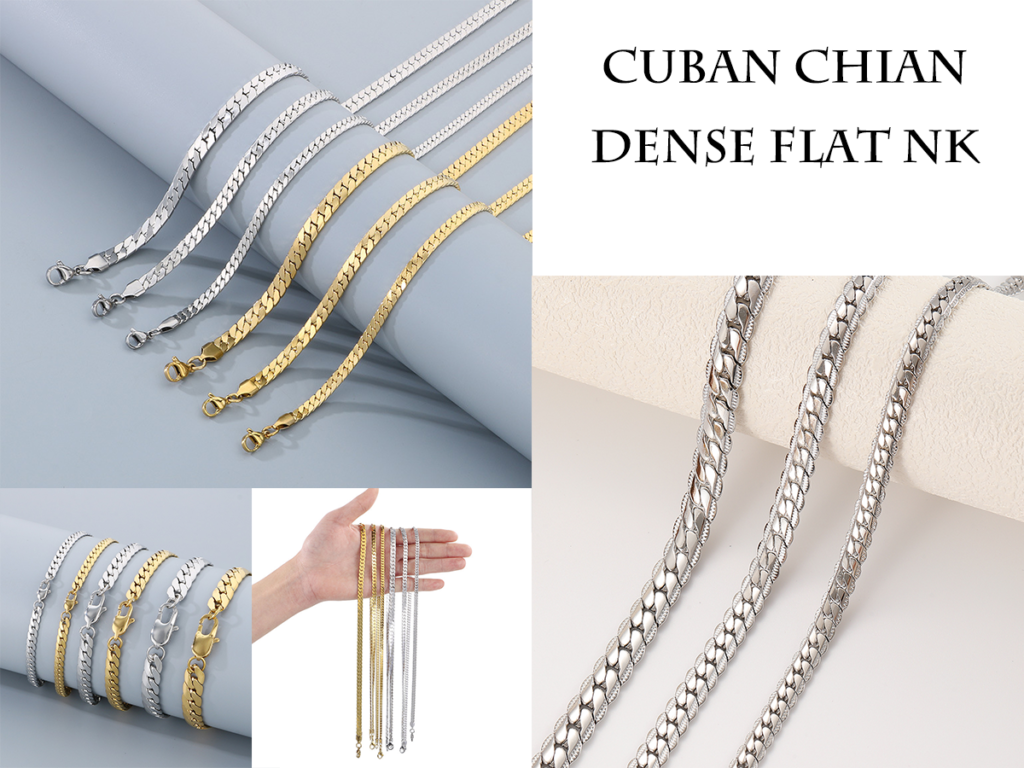
The dense flat NK chain is another strong-selling style widely used in fashion jewelry collections.
Compared with standard NK chains, this variation features a denser and flatter link structure, which creates a more substantial appearance while still maintaining comfortable wearability.
Because of this improved structure, the price is usually slightly higher than regular NK chains, but still remains within a competitive range for most jewelry markets.
This chain style is commonly available in several surface variations, including:
- Smooth polished finish
- Textured or pressed patterns
- Flattened surface designs
The most commonly used widths include:
- 4mm
- 6mm
- 8mm
These sizes work well for both men’s and women’s jewelry, making the dense flat NK chain a versatile and easy-to-sell option.
Thanks to its balance between appearance, durability, and price, this style is often considered a reliable profit product for jewelry retailers and brands.
4.Combination Cuban Chain (Reverse-Link Style)
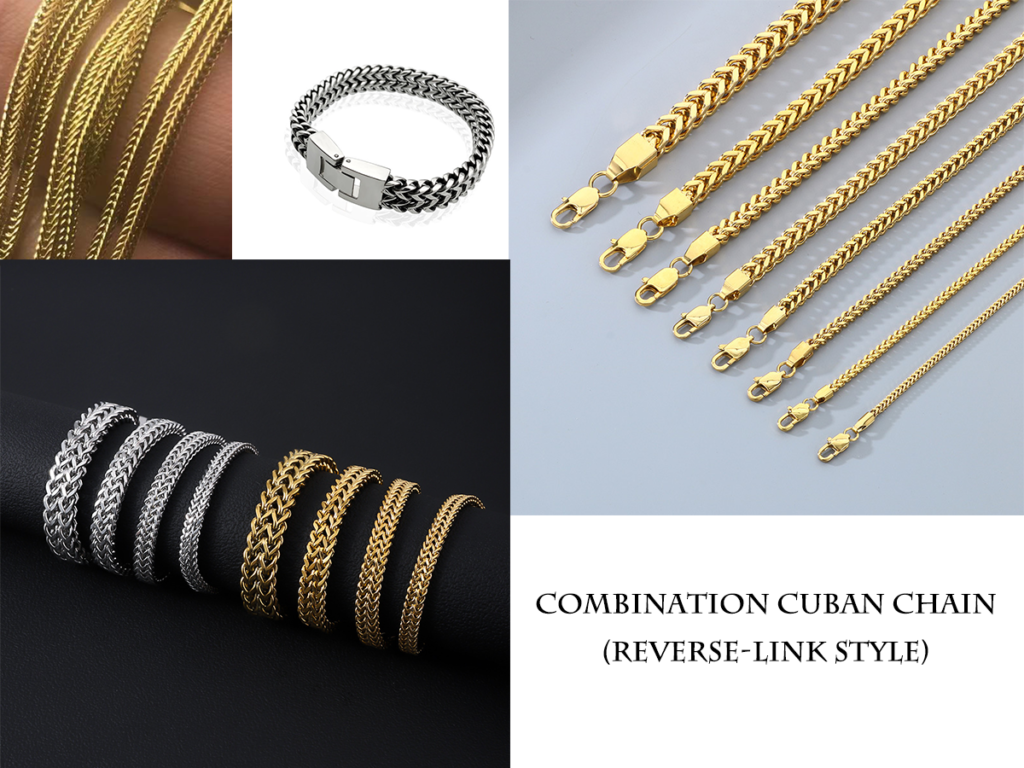
Another interesting variation is the combination Cuban chain, sometimes referred to by manufacturers as the reverse-link chain.
This type of chain is created by combining links with different orientations, forming a more decorative and complex structure compared with standard Cuban chains.
Depending on the design, the links may feature square edges or rounded edges, producing different visual styles. Several variations of this structure are commonly produced, including:
- Two-link combinations
- Three-link combinations
Styles such as the foxtail chain can also be considered structural variations derived from similar link arrangements.
Because the structure is more complex, production difficulty increases and the price is generally higher than standard Cuban chains.
The most common widths for this style are:
- 4mm
- 5mm
- 6mm
Both double-row and triple-row versions are frequently used in high-end bracelet designs. When paired with magnetic clasps or premium closures, these chains create a very refined and luxurious appearance.
For many jewelry brands, this style is considered a high-margin product suitable for premium collections.
5.Double-Weave Cuban Chain
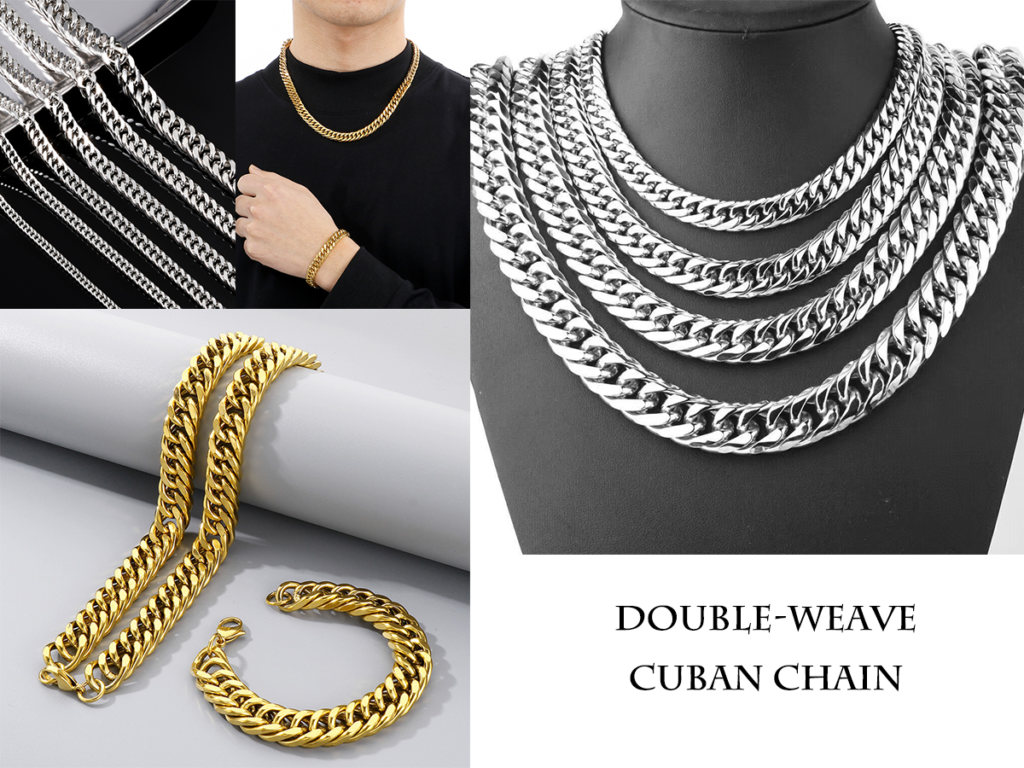
The double-weave Cuban chain is a more intricate variation of the traditional Cuban chain structure.
In a standard Cuban chain, each link connects to one adjacent link in a continuous pattern. In contrast, the double-weave design connects each link to two adjacent links, forming a tighter and more complex weaving structure.
Because of this design, manufacturers typically use slightly thinner steel wire during production. This allows the chain to remain flexible while maintaining a refined and elegant appearance.
Visually, double-weave Cuban chains often appear more delicate and sophisticated than regular Cuban chains.
Like standard Cuban chains, they can also feature various surface finishing techniques, such as:
- Two-facet cutting
- Four-facet cutting
- Six-facet cutting
- Rounded polish
However, the weaving process is more complex and labor-intensive, so double-weave Cuban chains are usually priced higher than traditional Cuban chains.
Due to their refined structure and elegant appearance, they are often positioned as higher-end products in jewelry collections.
Final Thoughts
Although Cuban chains are often discussed as a single category, the market actually includes a wide range of variations in structure, surface finishing, and density.
From cost-effective NK chains to premium double-weave designs, each style serves a different market segment and design purpose.
For jewelry brands and retailers, understanding these differences helps in selecting the right products for their target customers and price positioning.
Want to Learn More?
If you would like to learn more about Cuban chain materials, manufacturing processes, or customization options, feel free to contact the author for further discussion.
Frequently Asked Questions About Cuban Chains
What is the most popular Cuban chain style?
The NK chain and classic Cuban chain are among the most widely used styles due to their balance of price, durability, and versatility.
Which Cuban chain style is best for high-end jewelry?
Combination Cuban chains and double-weave Cuban chains are often used for premium jewelry designs because of their complex structure and refined appearance.
Why do different Cuban chains have different prices?
Price differences are mainly caused by variations in structure, density, surface finishing, and manufacturing difficulty.