
Rising Gold and Silver Prices Jewelry Material Alternatives
Rising gold and silver prices in the jewelry industry are reshaping how jewelry businesses approach materials and production strategies.
Gold and silver prices have surged dramatically, affecting jewelry manufacturers and retailers worldwide. This article explores how jewelry businesses are adapting through alternative materials like copper and stainless steel.
Keywords
silver price surge jewelry industry, rising silver cost jewelry market, copper jewelry manufacturing, stainless steel jewelry trend, jewelry material alternatives
Introduction
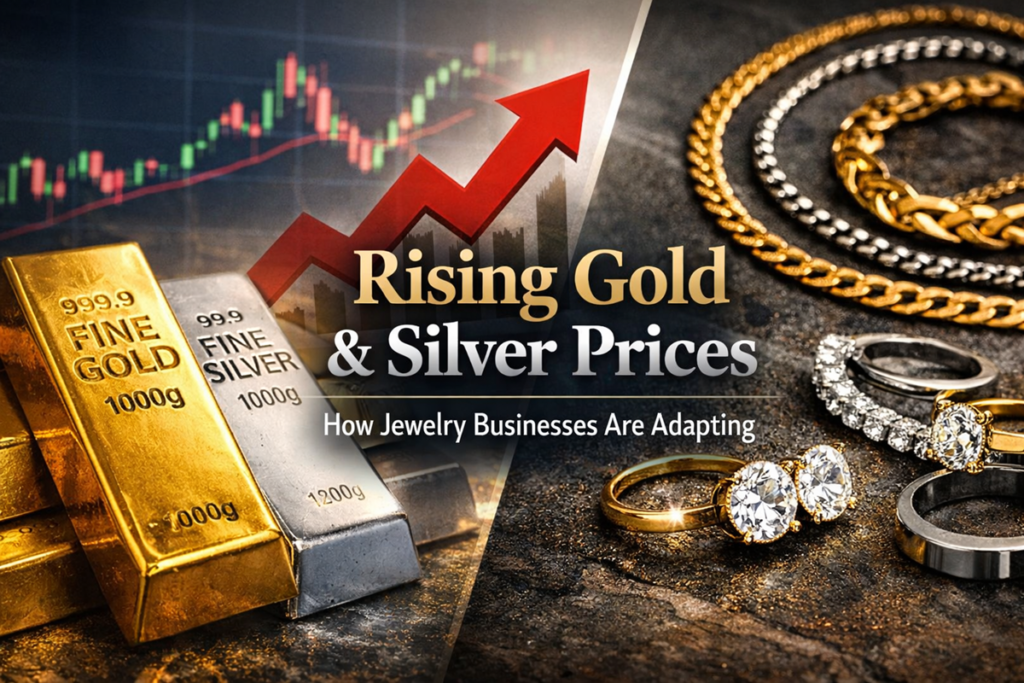
In recent years, rising precious metal prices have become a growing concern across the global jewelry industry. According to industry reports, gold prices have reached historic highs in recent years, while silver has also experienced significant volatility due to increasing industrial demand and limited supply. These fluctuations are forcing many jewelry brands and manufacturers to rethink their sourcing strategies and product materials.
Over the past year, the jewelry industry has experienced a noticeable shift driven by rising precious metal prices.
For many years, silver prices remained relatively stable. In earlier periods, silver could often be sourced for around $1 per gram, while more recently prices in some markets have moved closer to $3–$4 per gram, with peaks occasionally reaching even higher during periods of strong demand.
For businesses that rely heavily on precious metals, such rapid price changes create significant uncertainty. Raw material costs rise quickly, retail prices become harder to control, and the entire supply chain—from manufacturers to retailers—faces increased pressure.
In many markets, this has led to a temporary slowdown in demand. Consumers tend to become cautious when prices increase quickly, while wholesalers often reduce inventory purchases to avoid the risk of price fluctuations.
Despite these challenges, jewelry businesses must continue operating. The key question is how to adapt production and product strategies in a market where raw material prices are becoming less predictable.
The Impact of Rising Precious Metal Prices
When gold and silver prices increase rapidly, the effects can be felt across several parts of the jewelry industry.
Manufacturers face higher production costs, since raw materials account for a large portion of the total cost of jewelry. This can compress profit margins and make pricing strategies more difficult.
Wholesalers and distributors may become more cautious about stocking large quantities, especially when material prices fluctuate within short periods of time.
At the retail level, consumers may delay purchases or compare more options before making decisions. In some segments of the market, this can temporarily reduce sales momentum.
Together, these factors create a more conservative market environment.
Copper as a Manufacturing Option
Copper-based materials have long been used in jewelry production and remain an important option for certain types of designs.
One of the main advantages of copper is its excellent workability. The material is relatively easy to shape and allows for detailed processing. This makes it suitable for jewelry pieces that require precise casting, intricate structures, or stone settings.
Designs that involve gemstones or cubic zirconia often require materials that can support fine structural details. Copper performs well in these situations.
When combined with high-quality plating processes, copper jewelry can achieve a visual appearance that is similar to precious metal pieces while maintaining lower raw material costs.
However, achieving good results still depends on manufacturing expertise, particularly in polishing quality, plating thickness, and finishing techniques.
Stainless Steel in Modern Jewelry Design
Stainless steel has become increasingly common in contemporary fashion jewelry.
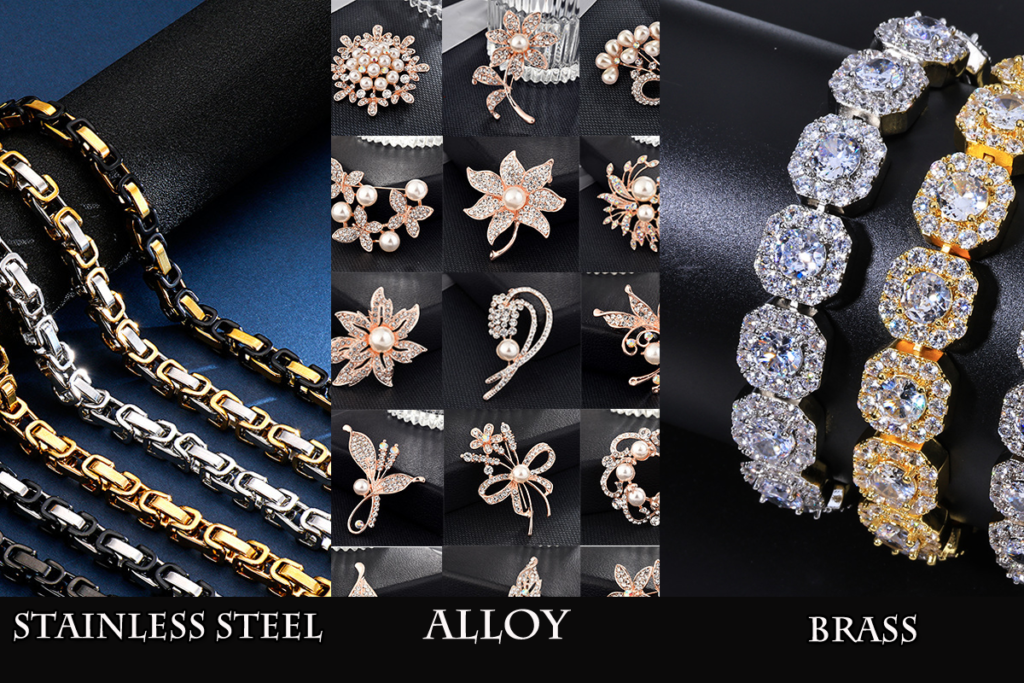
One reason is its durability. Stainless steel is resistant to corrosion and maintains structural strength over time. After proper polishing, it can achieve a smooth and reflective surface that works well for modern jewelry styles.
Another advantage is compatibility with PVD vacuum plating technology, which allows stainless steel jewelry to maintain stable color and surface quality for longer periods.
In addition, stainless steel is generally considered skin-friendly and suitable for everyday wear, which contributes to its growing popularity among consumers.
However, stainless steel also presents certain limitations. Because the material is harder and more difficult to process than softer metals, extremely detailed structures or delicate stone settings may be more difficult to achieve.
For this reason, stainless steel is frequently used in products such as chains, minimalist geometric designs, and jewelry with smooth surfaces.
Alloy Materials in Certain Market Segments
Alloy materials are also present in some parts of the jewelry market, particularly in products positioned at lower price ranges.
These materials are generally easy to process and suitable for large-scale production, which can help reduce manufacturing costs.
However, alloys may also present challenges in terms of perceived value and durability. Some consumers associate alloy jewelry with lower-end products, and certain alloys may pose a risk of skin sensitivity.
For brands that originally specialized in sterling silver jewelry, the decision to introduce alloy materials often requires careful evaluation of brand positioning and customer expectations.
Reinvesting Cost Savings into Craftsmanship
Another strategy some businesses adopt is to reduce raw material costs while increasing investment in craftsmanship and finishing quality.
When materials such as copper or stainless steel reduce the overall material expense, the saved cost can potentially be redirected toward areas such as:
- improved polishing processes
- higher-quality plating
- more refined surface finishing
- better design development
In many cases, well-designed jewelry with high manufacturing quality can still deliver strong perceived value, even when precious metals are not the primary material.
This approach allows companies to maintain product appeal while keeping retail prices more stable.
Observations from Industry Practice
As a jewelry manufacturer specializing in copper and stainless steel jewelry for more than ten years, we have observed noticeable changes in the market during the past several months.
Recently, a number of jewelry businesses that traditionally focused on gold or silver products have begun exploring alternative materials.
Many of these companies are not abandoning their original product lines. Instead, they are expanding their collections by introducing additional material options.
From discussions with various clients, a common strategy seems to be emerging:
- maintaining existing precious metal collections
- adding copper or stainless steel product lines
- developing designs suited to these materials
- creating greater flexibility in their product structure
For many businesses, this adjustment appears to be a practical way to maintain stable operations during a period of raw material price volatility.
A Market That Is Gradually Diversifying
It is also worth noting that copper and stainless steel are no longer limited to low-cost jewelry categories.
Many contemporary fashion jewelry brands—and even some premium accessory brands—have incorporated these materials into their collections.
Several factors contribute to this shift:
- more stable material costs
- improvements in plating technology
- increasing consumer acceptance
- evolving design trends in fashion jewelry
As the industry evolves, jewelry markets are gradually becoming more diverse in terms of materials and production methods.
Conclusion
The recent surge in gold and silver prices has created challenges for many jewelry businesses. At the same time, it has encouraged the industry to reconsider traditional production strategies.
Exploring alternative materials such as copper or stainless steel may provide one possible path for adapting to current market conditions.
Each material has its own advantages and limitations, and the most suitable choice often depends on product design, brand positioning, and customer expectations.
Rather than relying on a single material category, many companies may benefit from developing a more balanced product structure that combines precious metals with alternative materials.
In a market where raw material prices continue to fluctuate, flexibility and adaptability may become some of the most valuable strengths for jewelry businesses moving forward.