
Two stainless steel rings can look similar but be made in completely different ways. The forming method affects the design, tooling cost, unit price and suitable order quantity.
For buyers, choosing the right process early can save both time and money. Think of these four methods as four different tools: each one is good at a different job.
This guide focuses only on how the main ring shape is formed. Polishing, PVD plating and stone setting are separate production stages.
The 30-Second Comparison
| Method | Best for | Main advantage | Buyer should know |
|---|---|---|---|
| Casting | Complex 3D designs | High design freedom | Mold and more polishing increase cost |
| Lathe machining | Regular circular bands | Very low cost in bulk | Best for simple, symmetrical shapes |
| Hydraulic pressing | Affordable rings with patterns | Good balance of price and variety | Many ready-made ring blanks are available |
| Laser cutting | Flat and openwork designs | Fast, flexible small-batch customization | Not suitable for deep 3D details |
1. Casting: The Choice for Complex 3D Rings
Casting is suitable for skulls, emblems, deep reliefs and other designs with strong three-dimensional details. If a ring looks more like a small sculpture, casting is usually the first process to consider.
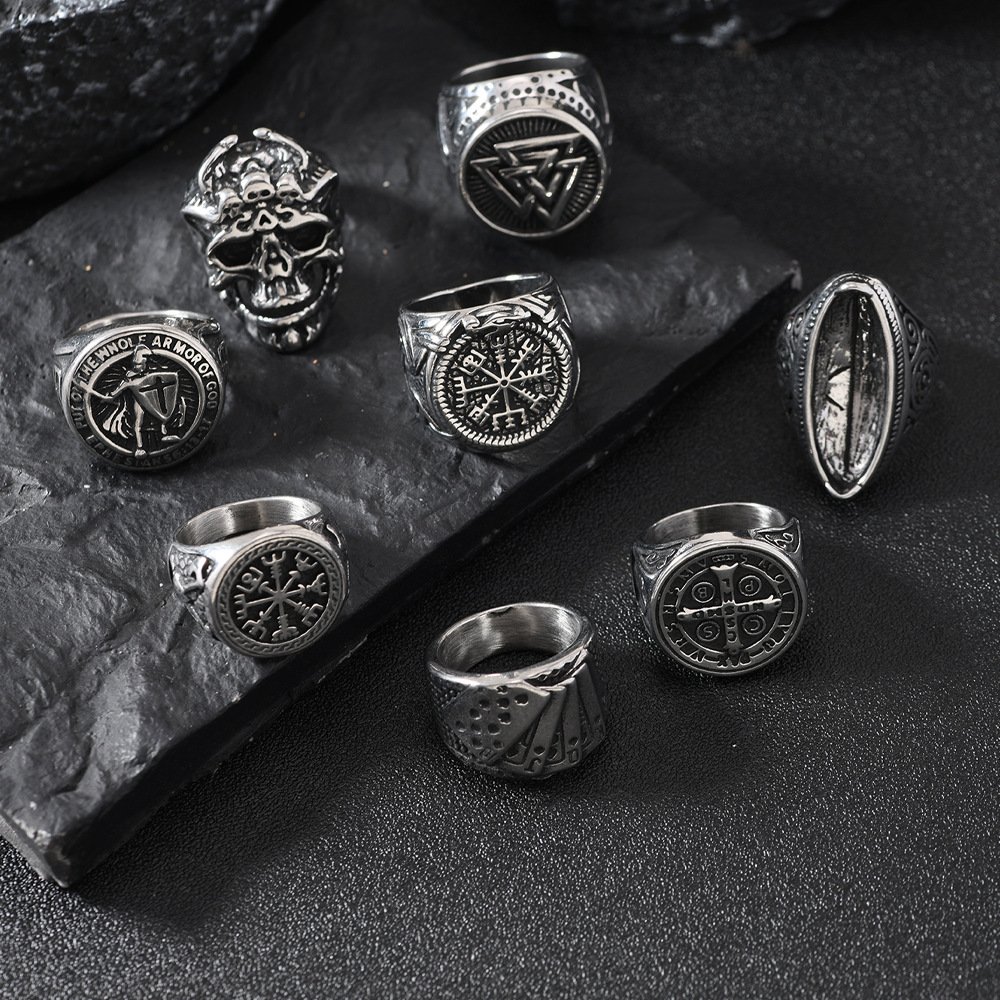
Its biggest advantage is design freedom. Casting can achieve a very wide range of complex shapes, but it requires a mold and careful polishing. This makes the development and production cost higher.
Best for: distinctive statement rings where design impact matters more than the lowest price.
2. Lathe Machining: The Low-Cost Bulk Option
Lathe-machined rings are produced from stainless steel tubes. The process is ideal for regular circular bands, including plain rings in different widths.
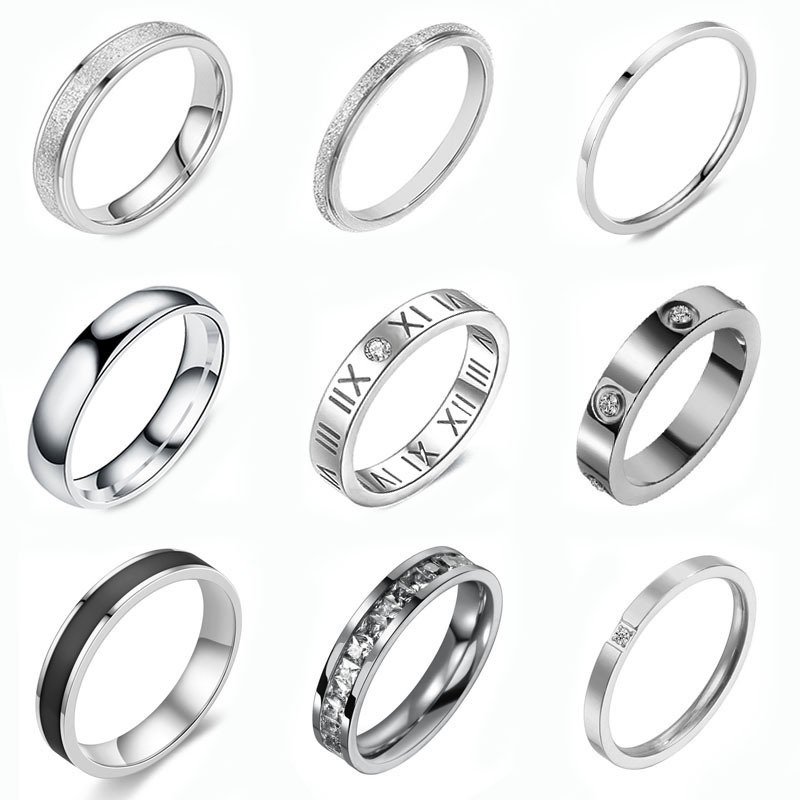
No product mold is required, production is efficient and the regular surface is easy to polish. For large quantities of simple rings, this method can keep the cost very low.
The stones, engraving and surface effects in the image are later decorative processes. Lathe machining mainly creates the basic circular ring body.
Best for: affordable basic bands and high-volume commercial orders.
3. Hydraulic Pressing: The Popular Middle Ground
Hydraulic pressing is often called ??il pressing??in Chinese jewelry factories. A hydraulic press and a die create the pattern and basic shape, and shaping tools then form the piece into a ring.
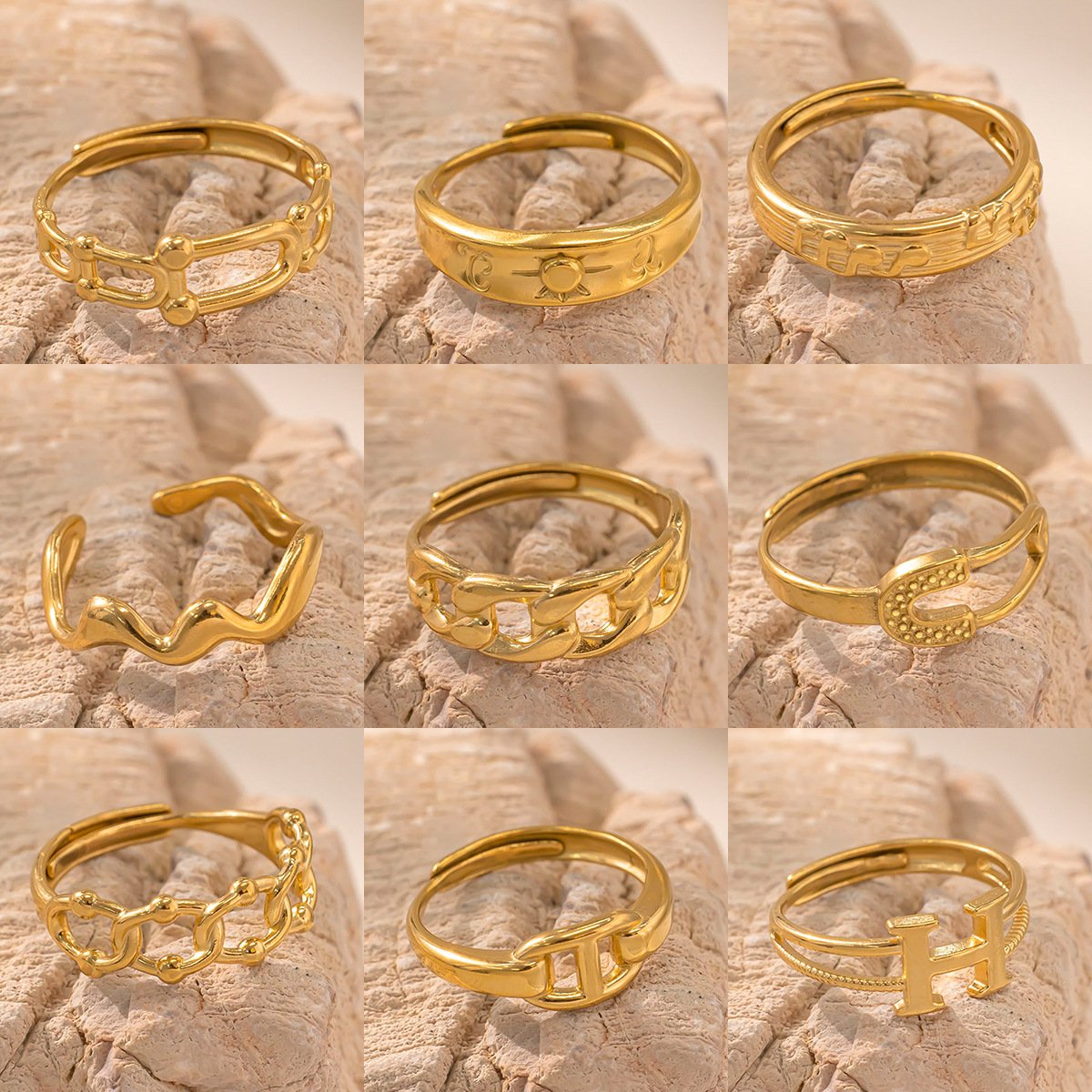
This method costs a little more than basic lathe machining, but it offers much richer shapes and textures. The market also has many ready-made ring blanks, allowing buyers to choose from a large number of styles without developing every ring from zero.
Best for: brands and wholesalers that want an affordable collection with plenty of variety. For many commercial ring projects, this is our most recommended option.
4. Laser Cutting: Fast Customization for Flat Designs
Laser cutting works well for letters, symbols, geometric outlines and openwork patterns. The design is cut as a flat shape and then formed into a ring.
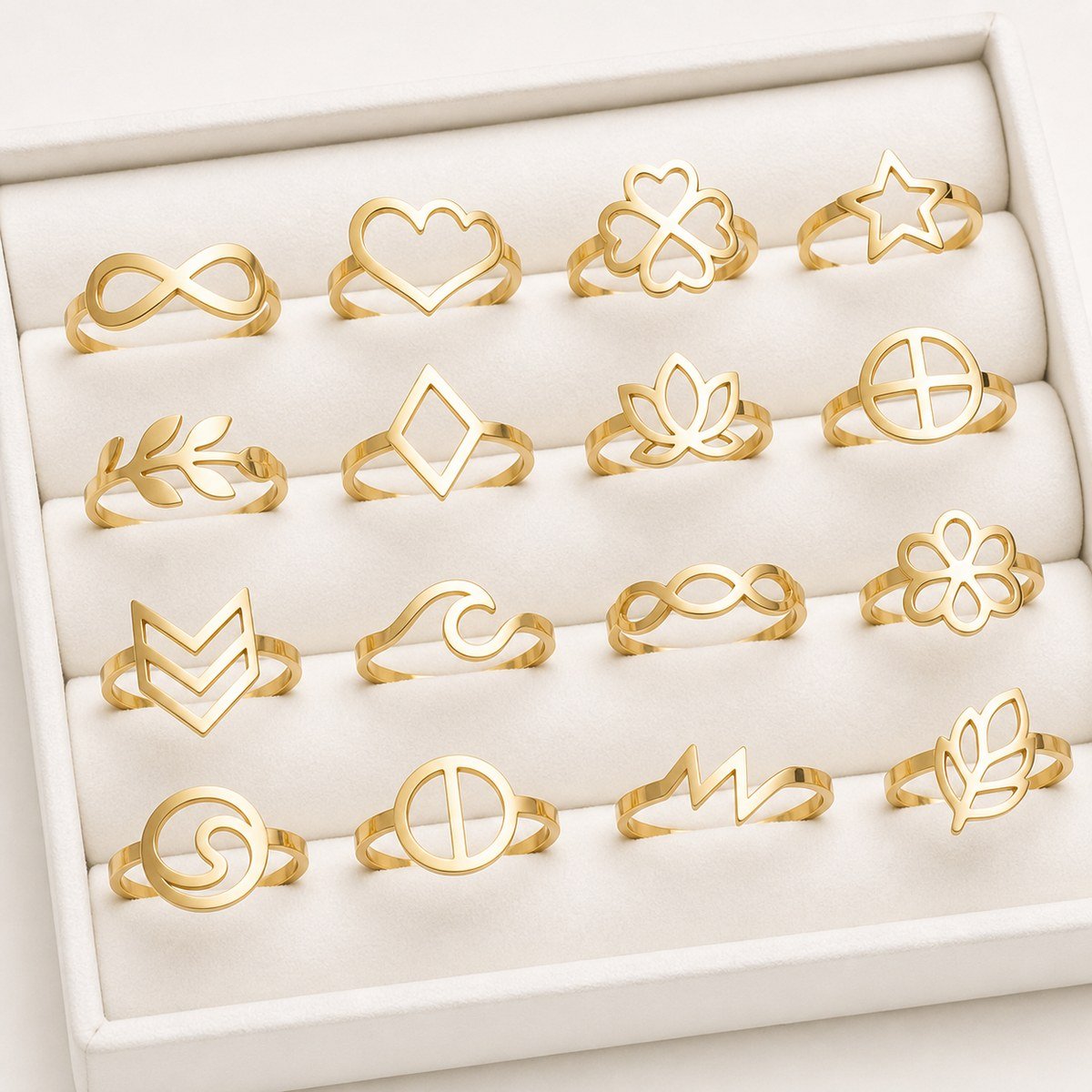
Compared with hydraulic pressing, it removes the pressing step. Production is fast, the cost is relatively low and different flat patterns can be customized efficiently.
Best for: small-batch special designs, new-product testing and distinctive flat patterns.
Which Process Should You Choose?
Use this simple shortcut:
- Choose casting when the design is complex and three-dimensional.
- Choose lathe machining when the ring is round, simple and required in large quantities.
- Choose hydraulic pressing when you want affordable prices with more shapes and textures.
- Choose laser cutting when you need flat custom patterns in smaller batches.
The most expensive process is not always the best one. The best process is the one that matches your design and sales plan.
Final Takeaway
Before requesting a quotation, prepare four things: your design reference, target quantity, target price and required ring sizes. A professional factory can then recommend a practical forming method before sampling begins.
DOMI Jewelry supports stainless steel jewelry OEM and ODM projects for brands, wholesalers and importers. To discuss a ring design, contact Vivian at vivian@domijewelry.com or WhatsApp +86 137 1718 4558.
Frequently Asked Questions
Which process is usually the cheapest?
For regular circular bands in large quantities, lathe machining is normally the lowest-cost option because it uses stainless steel tubes and requires no product mold.
Which method is best for a varied but affordable collection?
Hydraulic pressing offers a strong balance of price and design variety. Buyers can also select from many existing ring blanks.
Can small batches of custom rings be produced?
Yes. Laser cutting is especially suitable for small batches of flat or openwork designs. Complex three-dimensional designs normally require casting.